MN metro

Restaurant financing in Saint Paul.

Saint Paul restaurants build their entire year around six months of usable patio weather, then figure out how to keep the doors open through a Minnesota winter.

How do Saint Paul food businesses get funded?

Saint Paul operators start with a free review with a specialist, share recent business bank statements, and are matched to the programs that fit the use of funds. Working capital funds in 1 to 3 business days after you choose an offer, equipment in 1 to 5, and buildout capital in 1 to 4 weeks.

Estimates, not offers: Amounts, terms, and funding times are estimates based on programs commonly available in food service. Actual terms vary by program, lender underwriting, time in business, revenue, and credit profile. Nothing here is an offer of credit or a guarantee of approval. See source and method.

How Saint Paul eats, and what that does to cash

01

Where Saint Paul eats

Grand Avenue carries Saint Paul's sit-down dinner trade, with white-tablecloth and mid-priced bistro menus in the $20 to $35 entree range serving nearby Macalester College families and Summit Avenue residents. Selby Avenue and Cathedral Hill mix wine bars and chef-driven small plates aimed at date-night spending near $40 to $60 per person. Downtown around Rice Park and the Xcel Energy Center serves pre-event crowds tied to Minnesota Wild games and convention traffic from the Saint Paul RiverCentre. The West Side and District del Sol hold the city's Mexican food identity, with taquerias and mercados serving working families at counter-service prices under $12. University Avenue toward the Frogtown and Midway neighborhoods carries Hmong, Vietnamese, and East African kitchens at value price points, feeding a population without the tourist volume that Minneapolis draws across the river, which caps how high check averages can run in these corridors.
02

What Saint Paul serves

University Avenue's Hmong and Southeast Asian restaurants, concentrated around the Hmongtown Marketplace and Little Mekong district, serve larvae-free pho, papaya salad, and sticky rice at tickets typically under $15. The West Side's taquerias serve tacos and tortas to a longstanding Mexican-American community at similarly low price points. Grand and Selby Avenue kitchens run counter to that with $25 to $40 entrees built around Midwest supply chains, walleye, and wild rice. Food halls have not taken hold in Saint Paul the way they have in Minneapolis, so the format mix leans toward standalone counter-service ethnic kitchens and sit-down neighborhood restaurants rather than shared commissary spaces. Winter forces heavy reliance on indoor seating since patio months run only May through September. Because patio capacity disappears for roughly half the year, operators lose a seating tier that other Sun Belt cities can use year-round, and that missing capacity shows up as a real seasonal revenue gap.

03

Saint Paul's calendar

3M, Ecolab, and the state government campus around the Capitol anchor weekday lunch demand downtown, with state legislative session from January through May driving extra foot traffic near the Capitol complex. The Minnesota Wild's NHL season, October through April, fills bars and restaurants near the Xcel Energy Center on game nights. The Saint Paul Winter Carnival in late January draws crowds downtown during the year's coldest stretch, offsetting what would otherwise be a dead period. The Minnesota State Fair, technically in adjacent Falcon Heights but drawing heavily from Saint Paul's East Side, runs the last week of August through Labor Day and pulls discretionary dining dollars toward fairground vendors instead of neighborhood restaurants. Winter cold below zero from December through February suppresses walk-in and patio traffic citywide, and that stretch produces the year's most predictable revenue trough.

04

Growth and cost in Saint Paul

New restaurant openings cluster along West 7th Street and the Lowertown Warehouse District near CHS Field, where residential conversions have added apartment density and foot traffic since the Saint Paul Saints moved there. Commercial rent in Lowertown and West 7th runs below Minneapolis's North Loop, which continues to draw operators priced out of that market. Minnesota's statewide minimum wage and Saint Paul's own earned sick and safe time ordinance add payroll compliance costs beyond what suburban Twin Cities locations carry. Utility costs peak in winter as heating demand rises for older Saint Paul buildings with less efficient HVAC than new-build Minneapolis spaces. Buildout timelines in historic districts like Lowertown face added review for facade and structural work, and that added review regularly pushes planned opening dates back by several weeks.

Food service operation in Saint Paul
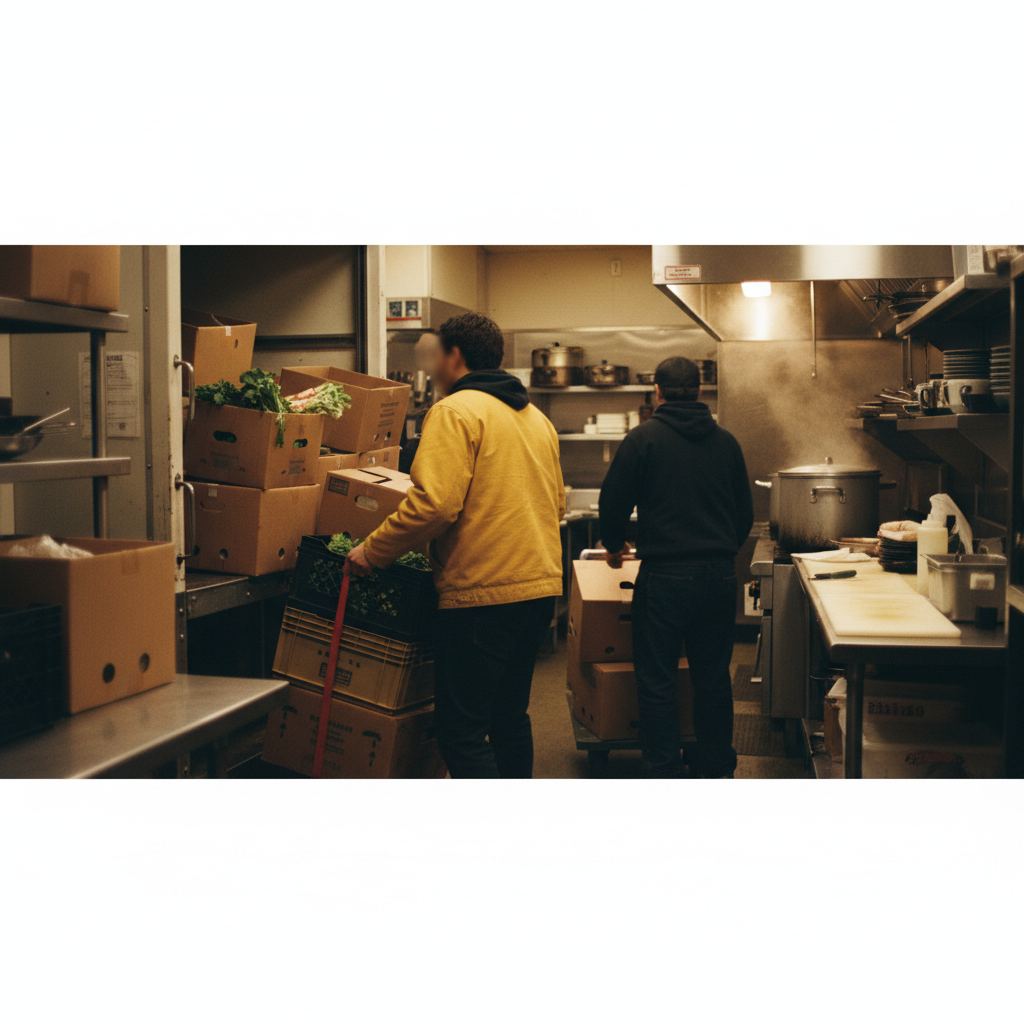
Saint Paul food service. Illustration generated with AI. Not a photograph of a Foody Finance client or location.

What drives financing conversations in Saint Paul

Financing here commonly covers heated outdoor seating structures and indoor capacity upgrades that let a concept keep serving through the cold months instead of losing patio revenue outright. Grand Avenue and Lowertown concepts also draw on capital tied to the Minnesota State Fair season and downtown event traffic.

Revenue and seasonality in Saint Paul

Warm-weather months from roughly May through September carry a disproportionate share of annual revenue for patio concepts along Grand Avenue and West Seventh. Winter brings a real drop in walk-in and outdoor traffic, and a restaurant that budgets around summer averages can fall short of cash in the coldest months.

What this does to your numbers

Most of the year's money comes in during the warm months, and winter can be a real dry stretch for foot traffic and patio sales.

Permitting in Saint Paul, and what it costs to wait

Saint Paul's Department of Safety and Inspections issues food and liquor licenses locally, though Minnesota's separate liquor control statutes still govern license class and hours. A concept planning a winter opening should assume city review runs its normal weeks-long track regardless of season, since cold weather does not speed up inspection scheduling.

What the wait actually costs

City licensing still takes its normal few weeks even for a winter opening, so cold weather doesn't speed anything up.

What raises the cost of capital here

  • 01Minnesota's roughly six-month cold season sharply reduces patio and walk-in traffic for half the calendar year
  • 02City of Saint Paul licensing through its Department of Safety and Inspections still takes normal weeks-long review regardless of season
  • 03Heated outdoor structures needed to extend the patio season add meaningful upfront equipment cost

Which program usually fits here

Working capital saved from the busy season, or equipment financing for heated outdoor seating, both help cover the winter slowdown.

Saint Paul
Minnesota outline. Boundary data: US Census Bureau cartographic boundary files, public domain. Simplified for display.

Free review, no hard credit pull

Get funds now and review your options

Step 01 of 03 · Your operation

A specialist reviews every request and reaches out the same business day

Areas we serve

  • Grand Avenue
  • Lowertown
  • Como Park
  • West Seventh
  • Highland Park

Financing terms on this page

Definitions for the terms used above.

working capital
Cash for the everyday gaps: payroll, inventory, rent, and repairs. It is repaid out of daily or weekly sales rather than from one big event.
equipment paper
A loan or lease tied to a specific machine. The machine itself is the security, so approval leans on the value of the hardware more than on your bank statements.
draw
Taking money out of an approved line or loan. Draws tied to construction milestones mean you only start paying interest on each piece as you use it.
buildout capital
Money for the work that turns a space into a working kitchen: plumbing, electrical, hoods, walls, and permits. It pays for labor and materials you cannot resell, so it is priced differently than money for a fryer.
hard credit pull
A formal credit check that shows on your report and can move your score a few points. It happens only after you pick a specific lender, not to get information.
covers
The number of guests served. Lenders pair it with check average to judge how reliable a month really is.
commissary
A licensed production kitchen used to prep off site, most often by trucks and catering operations. It carries its own rent, equipment, and permits.
underwriting
The lender reading your numbers to decide how much risk you are. Bank statements, time in business, and existing debt carry the most weight.
term
How long you have to repay. A longer term lowers the monthly payment and raises what the money costs in total.

Saint Paul financing questions

How should a Saint Paul restaurant with outdoor seating plan financing around winter?

Patio revenue along corridors like Grand Avenue is heavily front-loaded into the warmer months, and a Minnesota winter can cut walk-in and outdoor traffic sharply for several months at a stretch. Working capital set aside during the strong season, or equipment financing for heated outdoor structures that extend usable patio time, both help smooth the winter cash gap.

Does the Minnesota State Fair affect restaurant revenue outside the fairgrounds in Saint Paul?

The State Fair draws heavy regional traffic for its run in late summer, and some of that spillover reaches nearby neighborhoods and event-goers passing through the city, though the effect is smaller than for vendors inside the fairgrounds itself. It is one more seasonal peak that a Saint Paul restaurant's cash flow planning should account for alongside the broader summer patio season.

Why do Saint Paul restaurants near the Capitol see such a sharp lunch swing between January and summer?

The Minnesota legislature is in session from January through May, and that period brings a steady weekday lunch and after-work crowd of legislative staff, lobbyists, and state employees to restaurants near the Capitol and downtown core. Once session ends, that specific traffic drops off through the summer months, even though tourism and Wild playoff runs can partially offset it. Lenders reviewing deposit patterns for a Capitol-area restaurant should expect a legislative-session bump rather than treating the summer falloff as a sign of declining business.

How do Saint Paul food businesses start a financing conversation?

Start with a free review by a specialist. You share the basics of the business, the use of funds, and recent bank statements, and you see every program that fits before any credit application exists. Short term options commonly fund in 1 to 3 business days once you choose an offer.

Do you serve areas outside Saint Paul in Minnesota?

Yes. Every program is available statewide in Minnesota and nationwide.

What is working capital, and when does it fit a Saint Paul operator?

Cash for the everyday gaps, repaid out of sales on a set schedule instead of at the end of a project. Use it for payroll, inventory, a slow stretch, or a job you have to fund before the client pays you. Typical size is 10,000 to 500,000, funding runs 1 to 3 business days once you choose an offer, and you repay it as fixed daily, weekly, or monthly payment. You will be asked for: application, 3 to 6 months of bank statements.

What is equipment financing, and when does it fit a Saint Paul operator?

You borrow against a specific machine, and the machine is what backs the loan. Use it when a fryer, a walk-in, an oven, or a vehicle has to be replaced and you would rather keep the cash in the account. Typical size is 5,000 to 500,000, funding runs 1 to 5 business days once you choose an offer, and you repay it as fixed monthly payment. You will be asked for: application, equipment quote, bank statements.

What is buildout and expansion, and when does it fit a Saint Paul operator?

Construction money for the work that turns a space into a working kitchen, usually released in stages as the job progresses. Use it for a second location, a remodel, a patio, or a kitchen conversion, and size it to cover the permit wait, not just the build. Typical size is 50,000 to 2,000,000, funding runs 1 to 4 weeks once you choose an offer, and you repay it as fixed payment, often with a draw schedule. You will be asked for: application, contractor bids, lease, financials.

Why does the Saint Paul calendar change what I should borrow?

Most of the year's money comes in during the warm months, and winter can be a real dry stretch for foot traffic and patio sales.

What does waiting actually cost me in Saint Paul?

City licensing still takes its normal few weeks even for a winter opening, so cold weather doesn't speed anything up.

Which program do most Saint Paul operators end up using?

Working capital saved from the busy season, or equipment financing for heated outdoor seating, both help cover the winter slowdown. That is a starting point, not a decision. The specialist review looks at your deposits, your time in business, and what the money is for before anything is recommended.

Does asking about financing in Saint Paul affect my credit?

No. Getting information is a conversation, not an application. There is no credit application and no hard credit pull until you have picked a specific lender and want to move forward.

Start the conversation

Talk to a specialist before you fill out an application.

Start with a free, no-obligation review. We will send the right application only after we know what you actually qualify for.

Start a free review

Prefer to call

(833) 505-1900