Yes. Foody Finance works with restaurants, bars, caterers, food trucks, ghost kitchens, and distributors across Nebraska. Equipment requests commonly fund in 1 to 5 business days, working capital in 1 to 3, and SBA financing in 3 to 12 weeks.
Estimates, not offers: Amounts, terms, and funding times are estimates based on programs commonly available in food service. Actual terms vary by program, lender underwriting, time in business, revenue, and credit profile. Nothing here is an offer of credit or a guarantee of approval. See source and method.
How Nebraska actually makes its money in food
01
What Nebraska actually orders
Omaha built its reputation on steakhouses, a legacy of the Union Stockyards that once made the city one of the country's largest meatpacking centers, and restaurants like Johnny's Cafe still serve bone-in ribeyes to a clientele that includes stockyard-adjacent families going back generations. The Reuben sandwich claims Omaha's Blackstone Hotel as its disputed birthplace, and the city leans into that history at delis across the metro. Runzas, a bread pocket stuffed with beef, cabbage, and onion, originated among Volga German immigrants and now anchor a statewide fast-food chain headquartered in Lincoln, unique to Nebraska and rarely found elsewhere. Lincoln, built around the University of Nebraska, supports a denser bar and casual-dining scene tied to Husker football Saturdays than its size would otherwise justify. Western Nebraska towns along the Platte River and North Platte lean on diner-style cafes serving corn-fed beef and German-Russian dishes like kuchen, a fruit-topped pastry. Scottsbluff and the Panhandle carry a distinct Mexican food presence tied to generations of agricultural labor. That Runza-versus-national-chain competition forces Lincoln operators to defend a hyper-local product against Omaha and Kansas City chains expanding westward.
02
How the stockyards and homesteads built the plate
The Homestead Act of 1862 pulled German, Czech, and Scandinavian settlers into Nebraska farmland, and their descendants still run the kolache bakeries in towns like Wilber, which calls itself the Czech Capital of Nebraska. Omaha's Union Stockyards, opened in 1883 and at times the largest livestock market in the country, built the city's meatpacking industry and drew waves of Eastern European, Irish, and later Latino workers into South Omaha, a neighborhood still anchored by Mexican and Central American restaurants tied to that packing-plant labor history. Volga German immigrants who settled around Lincoln in the late 1800s brought the dumpling and cabbage dishes that evolved into the Runza. The Union Pacific Railroad, headquartered in Omaha since 1862, built a transportation economy that made the city a food-distribution hub for the broader Plains region. Offutt Air Force Base near Omaha brought military families whose spending supports a cluster of chain restaurants in Bellevue and Papillion. Many South Omaha restaurant owners today are second-generation immigrants who started in the meatpacking plants their parents worked. That stockyard-to-storefront path still shapes how South Omaha's restaurant ownership gets financed and passed down.
03
The calendar that carries Nebraska restaurants
Husker football Saturdays from September through November drive the single biggest recurring revenue event in Lincoln, where bars and restaurants near Memorial Stadium plan staffing and inventory around a seven-game home slate. The College World Series, held every June at Omaha's Charles Schwab Field, brings a two-week surge of visitor traffic that downtown Omaha restaurants depend on disproportionately relative to the rest of the year. The Nebraska State Fair, relocated to Grand Island in 2010, pulls statewide vendor and visitor traffic each late August into September. Harvest season, running September through October for corn and soybeans in the eastern part of the state, drives grain-town cafe traffic tied to farm labor schedules. Winter across the Panhandle and western plains brings hard freezes and occasional blizzards that can shut down highway traffic and cut off small-town restaurants from both customers and deliveries for days at a time. Spring severe weather, including tornado outbreaks common across the eastern half of the state in April and May, can force temporary closures with little warning. That blizzard-driven delivery disruption creates inventory gaps that western Nebraska restaurants have to plan around every winter.
04
Who staffs Nebraska kitchens
Omaha and Lincoln support a mix of family-owned steakhouses, the statewide Runza chain, and a growing number of national franchises along interstate corridors like I-80, while small western towns depend almost entirely on independent, often single-family-owned cafes. Nebraska's minimum wage has risen through a series of ballot-initiative increases over the past several years, pushing it above the federal floor and changing labor cost planning for small-town operators used to a lower baseline. Meatpacking towns including Lexington, Grand Island, and Schuyler, home to major Tyson and JBS plants, depend heavily on Latino and, more recently, Somali and Guatemalan immigrant labor, and restaurant staffing in those towns competes directly with plant wages and shift schedules. Lincoln's restaurant labor pool leans on University of Nebraska students who clear out each May and December. Rural Nebraska's shrinking population, with many counties losing residents for decades, has left small-town restaurants chronically short of both cooks and servers. That plant-wage competition in packing towns forces nearby restaurants to match shift premiums they otherwise couldn't afford.
05
What it costs to run a Nebraska kitchen
Commercial rent in Omaha's Blackstone District and Lincoln's Haymarket has climbed as both neighborhoods redeveloped from warehouse and industrial space into dining destinations, running well above rates in Grand Island or North Platte. Beef sourced locally, given Nebraska's position as one of the country's top cattle-producing states, stays cheaper than the national average, and corn and soybean byproducts keep feed-adjacent food costs low, but produce and seafood must be trucked in from distribution hubs in Kansas City or Denver, adding freight time. Utility costs spike in both directions, with summer air conditioning demand in humid eastern counties and winter heating demand across the Panhandle's harsher, drier cold. Insurance costs for restaurants in tornado-prone eastern and central counties, particularly through spring storm season, run higher than in states without that exposure. Small-town restaurants also face rising property insurance tied to hail damage, common across the Plains. Natural gas and electricity costs also climb during summer irrigation season, when regional demand from agricultural operations pulls on the same grid restaurants depend on. That spring tornado season adds an insurance and closure risk that eastern Nebraska restaurants underwrite every year.
06
Where Nebraska restaurants expand next
New restaurant growth concentrates along Omaha's western suburban corridor, including Elkhorn and Gretna, where rooftop growth has outpaced the existing restaurant base and pulled in both national chains and independent second locations. Lincoln's growth follows the same pattern southward and southeast, with the Haymarket district and the area near the university's innovation campus adding density. Grand Island and Kearney, both regional hubs for surrounding agricultural counties, attract chain expansion aimed at customers who drive in from smaller towns for shopping and dining in a single trip. South Omaha continues absorbing new Latino-owned restaurant investment tied to the neighborhood's packing-industry roots. Building new in fast-growing suburban Omaha means competing for limited commercial contractor capacity against residential subdivision construction happening in the same corridors. Interstate 80 exits between Omaha and Lincoln, including near Ashland and Waverly, have also drawn new travel-center and fast-food development tied to freight traffic passing through the state. That shared contractor capacity between new housing and new restaurant space extends buildout timelines in the fastest-growing suburbs.
Licensing and permitting in Nebraska, and what it costs to wait
The Department of Agriculture licenses food establishments statewide.
Statewide licensing keeps timelines predictable, so most requests fund on the strength of deposit history rather than on a construction schedule.
What Nebraska operators finance
Vehicle, equipment, and working capital requests dominate.
The Nebraska revenue calendar
College football weekends and the summer event calendar produce the sharpest peaks, with steady weekday corporate volume in Omaha.
Revenue mix and seasonality in Nebraska
Steady weekday volume with event and game day spikes, plus catering and mobile service extending a kitchen's reach across a wide service area.
What this does to your numbers
Football weekends and the summer event calendar produce the sharpest peaks, with steady weekday corporate volume underneath.
What a delay costs in Nebraska
A wide delivery radius makes vehicles part of the kitchen, and corporate accounts pay on terms, so the work is done long before the money lands.
What underwriting looks at in Nebraska
01Insurance and financial services payrolls in Omaha support weekday catering
02Wide delivery radius makes vehicles part of the equipment picture
We work with operators across Nebraska, including Omaha, Lincoln, Bellevue, Grand Island, Kearney, and Papillion. Rural and small market operators qualify for the same programs.
College football weekends and the summer event calendar produce the sharpest peaks, with steady weekday corporate volume in Omaha
Insurance and financial services payrolls in Omaha support weekday catering
Acquisition, refinance, or a longer buildout
Estimates, not offers: Amounts, terms, and funding times are estimates based on programs commonly available in food service. Actual terms vary by program, lender underwriting, time in business, revenue, and credit profile. Nothing here is an offer of credit or a guarantee of approval. See source and method.
Educational only. Not an offer to lend, a commitment to fund, or a rate quote. Figures are illustrative and actual terms are set by the funding partner after underwriting. Downloading this does not create a brokerage, advisory, or fiduciary relationship with Foody Finance.
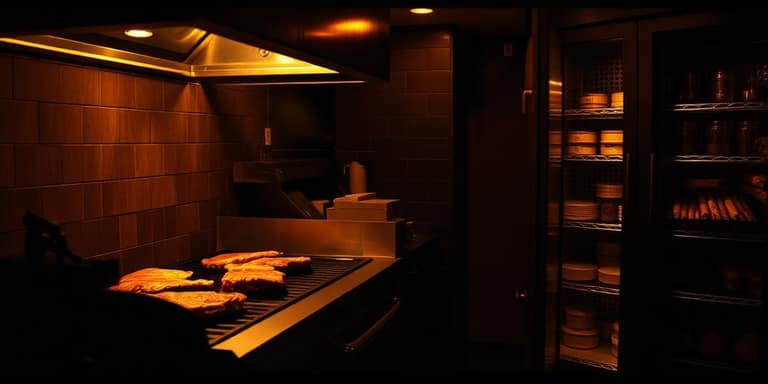
One page PDF with the Nebraska timelines table and the state plate photo
Nebraska plateRunzaBakery and oven capacity drives the equipment spend more than the cook line does
Financing terms on this page
Definitions for the terms used above. Every term links to its entry in the full glossary.
A loan or lease tied to a specific machine. The machine itself is the security, so approval leans on the value of the hardware more than on your bank statements.
Money for the work that turns a space into a working kitchen: plumbing, electrical, hoods, walls, and permits. It pays for labor and materials you cannot resell, so it is priced differently than money for a fryer.
A formal credit check that shows on your report and can move your score a few points. It happens only after you pick a specific lender, not to get information.
A preapproved pool of money you pull from only when you need it, then pay back and reuse. You pay for what you draw, not for the full amount sitting there.
Yes. Food service operators in Nebraska are referred for equipment financing, working capital, lines of credit, SBA loans, and buildout capital. Program availability varies by state. Merchant cash advance and other revenue-based financing structures are not offered to businesses in Texas, Virginia, or Connecticut.
How fast can a Nebraska restaurant get funded?
Short term programs commonly fund in 1 to 3 business days and equipment requests in 1 to 5. SBA financing in Nebraska runs 3 to 12 weeks.
What do Nebraska operators most often finance?
Kitchen equipment and delivery capacity. Catering and off premise service extend a single kitchen across a wide area here, so the vehicle and the cold storage are as important as the range.
Which Nebraska cities do you serve?
All of them. Operators we work with in Nebraska run in Omaha, Lincoln, Bellevue, Grand Island, Kearney, and Papillion, along with smaller markets across the state. Underwriting reviews deposits and the use of funds, not the population of the market.
What documents do Nebraska operators need?
For the first review, just the form. If you choose a short term program, the lender usually asks for 3 to 6 months of business bank statements. SBA adds tax returns, interim financials, and a debt schedule.
Does Nebraska licensing affect financing?
Licensing affects buildout timelines and, in some transactions, collateral value. Include local permitting details in the request so a funding partner can account for them when structuring financing.
Do I need a hard credit pull to start in Nebraska?
No. Our team reviews your request and looks for a funding partner that fits without a hard credit pull. A funding partner discusses programs with you and obtains your authorization before any hard credit pull.
What is equipment financing, and when does it fit a Nebraska operator?
You borrow against a specific machine, and the machine is what backs the loan. Use it when a fryer, a walk-in, an oven, or a vehicle has to be replaced and you would rather keep the cash in the account. Typical size is 5,000 to 500,000, funding runs 1 to 5 business days once you choose an offer, and you repay it as fixed monthly payment. You will be asked for: application, equipment quote, bank statements.
What is working capital, and when does it fit a Nebraska operator?
Cash for the everyday gaps, repaid out of sales on a set schedule instead of at the end of a project. Use it for payroll, inventory, a slow stretch, or a job you have to fund before the client pays you. Typical size is 10,000 to 500,000, funding runs 1 to 3 business days once you choose an offer, and you repay it as fixed daily, weekly, or monthly payment. You will be asked for: application, 3 to 6 months of bank statements.
What is buildout and expansion, and when does it fit a Nebraska operator?
Construction money for the work that turns a space into a working kitchen, usually released in stages as the job progresses. Use it for a second location, a remodel, a patio, or a kitchen conversion, and size it to cover the permit wait, not just the build. Typical size is 50,000 to 2,000,000, funding runs 1 to 4 weeks once you choose an offer, and you repay it as fixed payment, often with a draw schedule. You will be asked for: application, contractor bids, lease, financials.
Why does the Nebraska calendar change what I should borrow?
Football weekends and the summer event calendar produce the sharpest peaks, with steady weekday corporate volume underneath.
What does waiting actually cost me in Nebraska?
A wide delivery radius makes vehicles part of the kitchen, and corporate accounts pay on terms, so the work is done long before the money lands.
Which program do most Nebraska operators end up using?
Working capital covers the payment terms, and lower occupancy cost here keeps buildout requests modest compared to coastal markets. That is a starting point, not a decision. Our team reviews your deposits, time in business, and use of funds before looking for a funding partner that fits.
Does asking about financing in Nebraska affect my credit?
No. Getting information is a conversation, not an application. There is no credit application and no hard credit pull until you have picked a specific lender and want to move forward.
A location page indicates that Foody Finance is taking clients in that market. It does not represent a physical office, storefront, or licensed presence in that city or state. All services are delivered remotely by our US-based team.
Start the conversation
Send a request before you fill out an application
Start with a free, no-obligation request. Our team reviews it and looks for a funding partner that fits.