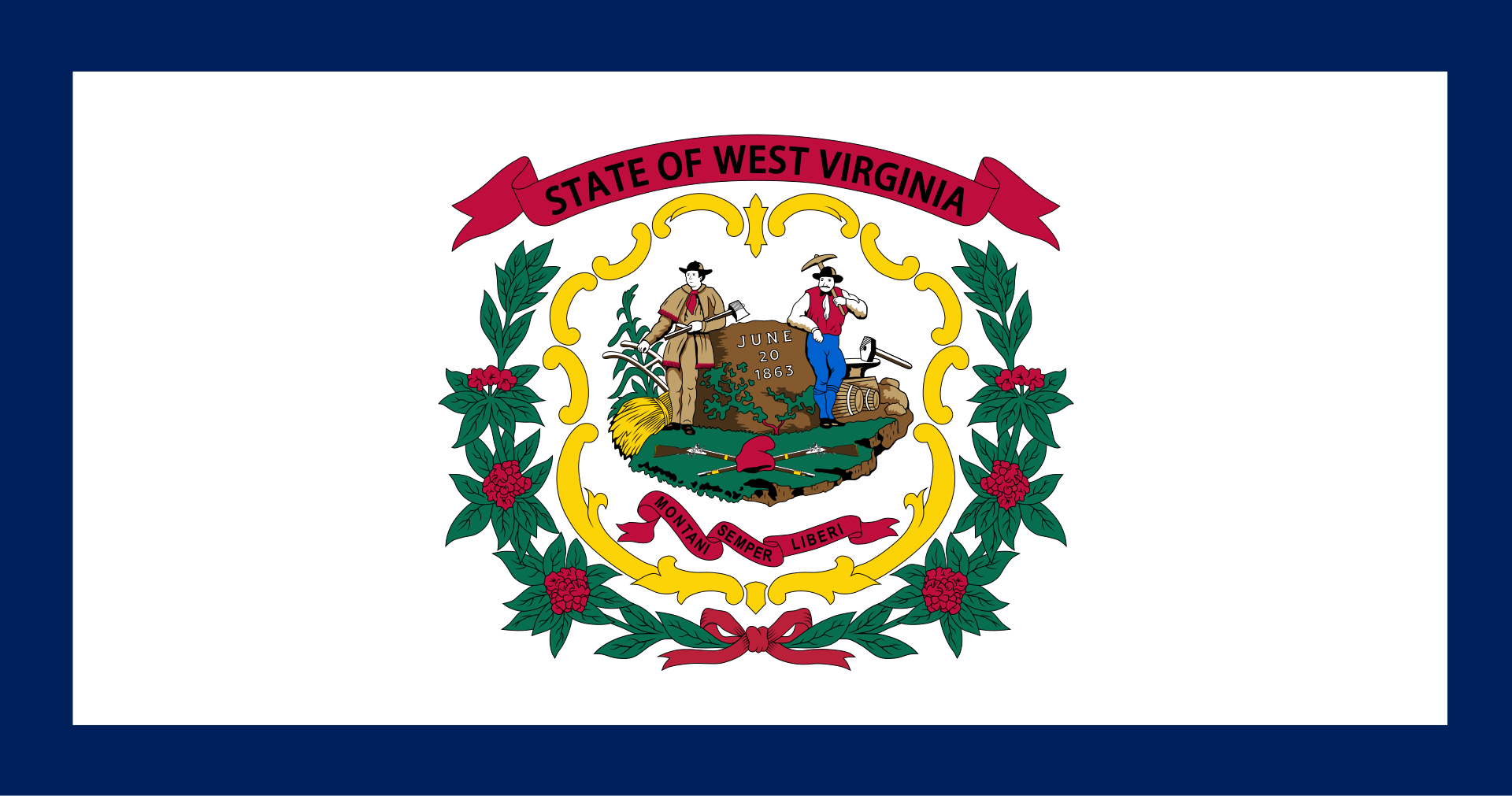
Can food businesses in West Virginia get financing?
Yes. Foody Finance works with restaurants, bars, caterers, food trucks, ghost kitchens, and distributors across West Virginia. Equipment requests commonly fund in 1 to 5 business days, working capital in 1 to 3, and SBA financing in 3 to 12 weeks.
Estimates, not offers: Amounts, terms, and funding times are estimates based on programs commonly available in food service. Actual terms vary by program, lender underwriting, time in business, revenue, and credit profile. Nothing here is an offer of credit or a guarantee of approval. See source and method.
How West Virginia actually makes its money in food
01
What West Virginia actually orders
Pepperoni rolls anchor the state's food identity, sold at gas stations, bakeries, and church fundraisers from Fairmont to Clarksburg, a legacy of Italian coal camp immigrants who needed portable lunch food for miners. Hot dogs come slaw-and-chili style, a combination locals defend as distinct from Cincinnati or Carolina versions. The Ohio Valley claims its own pizza style, thin and cracker-crusted with cold-cut toppings added after baking, centered on Wheeling. Ramps, the wild spring onion, drive dedicated dinners in April across Richwood and other mountain towns. Trout and venison appear on menus near the Monongahela National Forest, tied to hunting season traffic. Buckwheat cakes persist in Preston County, home to an annual festival built around them. Price points skew low statewide; a full plate lunch in most counties runs well under what a similar meal costs in Pittsburgh or Washington, D.C., because disposable income trails the national median and operators price to local wallets rather than tourist wallets, except in resort corridors like Snowshoe. This low ceiling on menu pricing means owners absorb rising food costs directly rather than passing them through, compressing margins during any wholesale price spike.
02
How coal, rail, and out-migration shaped the plate
Restaurant ownership in West Virginia traces to coal camp commissaries and the ethnic groups recruited to work the mines: Italians, Hungarians, and Poles who opened bakeries and delis once camps closed and towns incorporated. Fairmont and Clarksburg still have family-run Italian bakeries operating from recipes carried over a century ago. The state's population has shrunk for decades as coal employment fell, leaving many county seats with fewer restaurants per capita than they had in 1970 and a customer base skewing older. Charleston and Morgantown buck this trend, the former as the state capital with a stable government workforce, the latter as home to West Virginia University, which supports a bar and late-night food scene tied to the academic calendar. New River Gorge tourism, boosted by its 2020 national park designation, has pulled a wave of small operators into Fayetteville. Route 50 and Interstate 79 travel corridors sustain diners and truck-stop kitchens. This history of population loss outside a handful of anchor cities means many operators inherit buildings and equipment rather than financing new construction, but it also means slow customer growth locks revenue near flat for years at a stretch.
03
The calendar West Virginia restaurants live by
College football Saturdays in Morgantown from September through November move enormous volume through bars and wing spots near WVU's campus, with away weekends causing sharp drops. The state fair in Lewisburg in August draws multi-day crowds that rural vendors depend on for a meaningful share of annual revenue. Whitewater rafting season on the New and Gauley Rivers runs April through October, with the Gauley's fall releases in September and October bringing a concentrated surge of paying customers to Fayette County. Ramp dinners in April, buckwheat festivals in September, and the West Virginia Pumpkin Festival in October each pull single-weekend spikes to specific towns. Ski season at Snowshoe and Canaan Valley runs December through March, flipping those local economies to winter-dependent. Deer rifle season in late November brings hunters into small-town diners near state forests. Coal miner shift patterns still set meal timing in southern counties, with early breakfast and late dinner rushes built around mine schedules rather than typical 9-to-5 hours. Because so much revenue concentrates in narrow windows tied to a single river release schedule, a football season, or a two-week hunting stretch, a poor weather week during any of these windows creates a cash shortfall that has to be covered from reserves built the rest of the year.
04
Who's behind the counter
Independent, family-owned restaurants outnumber national chains in most counties outside Charleston, Huntington, and Morgantown, where fast food and casual chains cluster along commercial strips. Labor pools are thin: the state has one of the lowest labor force participation rates in the country, and rural restaurants regularly run with skeleton crews, cutting hours rather than turning away qualified applicants. West Virginia has not raised its state minimum wage above the federal floor, so wage costs sit at the legal minimum in most counties, though Morgantown and Charleston employers pay above it to compete with retail and university jobs. Younger workers often leave for Pittsburgh, Columbus, or out of state entirely, so many kitchens rely on workers in their 40s and 50s and on family labor, spouses and adult children working the register or the fryer. Seasonal tourism towns like Fayetteville and Snowshoe import labor for the busy months, housing staff in owner-provided rooms or trailers because local rental stock is too thin. This persistent labor shortage means owners frequently work the line themselves during peak hours instead of hiring up, which caps how many covers a small kitchen can turn on its busiest nights.
05
What it costs to run a kitchen here
Commercial rent in West Virginia ranks among the lowest in the country outside a few blocks of downtown Morgantown and Charleston, giving operators real flexibility on space compared to neighboring Virginia or Maryland. Utility costs run mixed: electricity is cheap because the state generates most of its own power from coal, but propane and heating costs spike hard in mountain counties during long winters, especially at elevation near Snowshoe and Canaan Valley. Produce sourcing is a genuine constraint; the state has limited large-scale agriculture beyond apples in the Eastern Panhandle and some cattle and poultry operations, so most fresh produce and much of the protein supply trucks in from Ohio, Virginia, or further, adding freight cost and lead time that flatland states don't carry. Insurance premiums run higher than the regional average due to an older building stock and a workforce with elevated on-the-job injury rates tied to the state's broader economy. Winter weather closes mountain roads for days at a time in Pocahontas, Randolph, and Tucker counties, cutting off both deliveries and customers. This combination of long produce supply lines and weather-driven road closures forces many rural operators to hold larger inventory buffers than their revenue would otherwise justify, tying up cash in stock that can spoil if a delivery truck can't get through.
06
Where the next West Virginia location opens
New restaurant openings concentrate around Morgantown's university growth, the Eastern Panhandle counties of Berkeley and Jefferson that function as commuter suburbs for Washington, D.C. and Northern Virginia, and the New River Gorge tourism corridor around Fayetteville. Berkeley County, anchored by Martinsburg, has added chain and independent restaurants fastest of any county in the state, driven by population inflow from Virginia and Maryland residents seeking lower housing costs while commuting via Interstate 81 and MARC rail extensions. Charleston's downtown has seen modest infill as state government and hospital employment hold steady, but net population loss in the Kanawha Valley limits appetite for large new buildouts. Rural county seats mostly see replacement rather than expansion, one operator closing as another opens in the same storefront. Snowshoe and Canaan Valley continue adding seasonal food service tied to resort expansion. Because the fastest-growing markets sit in the Eastern Panhandle, where land and construction costs track closer to the D.C. exurbs than to the rest of the state, an operator expanding from a low-cost county into Berkeley or Jefferson County faces a buildout budget that can run several times higher than what the same square footage cost back home.
Licensing and permitting in West Virginia, and what it costs to wait
Local health departments issue food establishment permits under state code.
Smaller markets and slower approvals mean an opening date can slip a quarter, and the request has to carry fixed cost until it holds.
What West Virginia operators finance
Equipment financing and modest working capital cover most requests.
The West Virginia revenue calendar
University towns swing with the academic calendar, and outdoor recreation traffic lifts spring through fall.
Revenue mix and seasonality in West Virginia
Morgantown and Huntington revenue tracks the academic year closely, recreation markets earn in summer and fall, and smaller communities run steady lower check average volume where one location serves the whole town.
What this does to your numbers
Ski and outdoor tourism carry the eastern counties, and the metro corridors run on weekday and university volume.
What a delay costs in West Virginia
Smaller markets mean longer equipment lead times and fewer service techs, so a breakdown is measured in weeks of lost covers.
What underwriting looks at in West Virginia
01Smaller markets mean a single location often serves an entire community
02Whitewater and outdoor tourism concentrates revenue in warm months
Equipment financing with a fast funding window matters more than a marginally lower payment when the alternative is a dark kitchen.
Markets we serve in West Virginia
We work with operators across West Virginia, including Charleston, Morgantown, Huntington, Parkersburg, Wheeling, and Martinsburg. Rural and small market operators qualify for the same programs.
University towns swing with the academic calendar, and outdoor recreation traffic lifts spring through fall
Smaller markets mean a single location often serves an entire community
Acquisition, refinance, or a longer buildout
Estimates, not offers: Amounts, terms, and funding times are estimates based on programs commonly available in food service. Actual terms vary by program, lender underwriting, time in business, revenue, and credit profile. Nothing here is an offer of credit or a guarantee of approval. See source and method.
Educational only. Not an offer to lend, a commitment to fund, or a rate quote. Figures are illustrative and actual terms are set by the funding partner after underwriting. Downloading this does not create a brokerage, advisory, or fiduciary relationship with Foody Finance.
One page PDF with the West Virginia timelines table and the state plate photo
West Virginia platePepperoni rollBakery equipment and wholesale accounts sit alongside the dining room, which changes how volume is underwritten
Financing terms on this page
Definitions for the terms used above. Every term links to its entry in the full glossary.
A loan or lease tied to a specific machine. The machine itself is the security, so approval leans on the value of the hardware more than on your bank statements.
Money for the work that turns a space into a working kitchen: plumbing, electrical, hoods, walls, and permits. It pays for labor and materials you cannot resell, so it is priced differently than money for a fryer.
A formal credit check that shows on your report and can move your score a few points. It happens only after you pick a specific lender, not to get information.
A preapproved pool of money you pull from only when you need it, then pay back and reuse. You pay for what you draw, not for the full amount sitting there.
Yes. Food service operators in West Virginia are referred for equipment financing, working capital, lines of credit, SBA loans, and buildout capital. Program availability varies by state. Merchant cash advance and other revenue-based financing structures are not offered to businesses in Texas, Virginia, or Connecticut.
How fast can a West Virginia restaurant get funded?
Short term programs commonly fund in 1 to 3 business days and equipment requests in 1 to 5. SBA financing in West Virginia runs 3 to 12 weeks.
Are West Virginia operators too small to finance?
No. Programs here are driven by monthly deposits and time in business, and requests in the smaller end of the range are common. Equipment financing in particular is sized to the unit being purchased, not the size of the town.
Which West Virginia cities do you serve?
All of them. Operators we work with in West Virginia run in Charleston, Morgantown, Huntington, Parkersburg, Wheeling, and Martinsburg, along with smaller markets across the state. Underwriting reviews deposits and the use of funds, not the population of the market.
What documents do West Virginia operators need?
For the first review, just the form. If you choose a short term program, the lender usually asks for 3 to 6 months of business bank statements. SBA adds tax returns, interim financials, and a debt schedule.
Does West Virginia licensing affect financing?
Licensing affects buildout timelines and, in some transactions, collateral value. Include local permitting details in the request so a funding partner can account for them when structuring financing.
Do I need a hard credit pull to start in West Virginia?
No. Our team reviews your request and looks for a funding partner that fits without a hard credit pull. A funding partner discusses programs with you and obtains your authorization before any hard credit pull.
What is equipment financing, and when does it fit a West Virginia operator?
You borrow against a specific machine, and the machine is what backs the loan. Use it when a fryer, a walk-in, an oven, or a vehicle has to be replaced and you would rather keep the cash in the account. Typical size is 5,000 to 500,000, funding runs 1 to 5 business days once you choose an offer, and you repay it as fixed monthly payment. You will be asked for: application, equipment quote, bank statements.
What is working capital, and when does it fit a West Virginia operator?
Cash for the everyday gaps, repaid out of sales on a set schedule instead of at the end of a project. Use it for payroll, inventory, a slow stretch, or a job you have to fund before the client pays you. Typical size is 10,000 to 500,000, funding runs 1 to 3 business days once you choose an offer, and you repay it as fixed daily, weekly, or monthly payment. You will be asked for: application, 3 to 6 months of bank statements.
What is buildout and expansion, and when does it fit a West Virginia operator?
Construction money for the work that turns a space into a working kitchen, usually released in stages as the job progresses. Use it for a second location, a remodel, a patio, or a kitchen conversion, and size it to cover the permit wait, not just the build. Typical size is 50,000 to 2,000,000, funding runs 1 to 4 weeks once you choose an offer, and you repay it as fixed payment, often with a draw schedule. You will be asked for: application, contractor bids, lease, financials.
Why does the West Virginia calendar change what I should borrow?
Ski and outdoor tourism carry the eastern counties, and the metro corridors run on weekday and university volume.
What does waiting actually cost me in West Virginia?
Smaller markets mean longer equipment lead times and fewer service techs, so a breakdown is measured in weeks of lost covers.
Which program do most West Virginia operators end up using?
Equipment financing with a fast funding window matters more than a marginally lower payment when the alternative is a dark kitchen. That is a starting point, not a decision. Our team reviews your deposits, time in business, and use of funds before looking for a funding partner that fits.
Does asking about financing in West Virginia affect my credit?
No. Getting information is a conversation, not an application. There is no credit application and no hard credit pull until you have picked a specific lender and want to move forward.
A location page indicates that Foody Finance is taking clients in that market. It does not represent a physical office, storefront, or licensed presence in that city or state. All services are delivered remotely by our US-based team.
Start the conversation
Send a request before you fill out an application
Start with a free, no-obligation request. Our team reviews it and looks for a funding partner that fits.