Nashville added restaurant and bar seats at a pace that outran the labor pool, and operators finance to keep service levels intact.
How do Nashville food businesses get funded?
Nashville operators start with a free review with a specialist, share recent business bank statements, and are matched to the programs that fit the use of funds. Working capital funds in 1 to 3 business days after you choose an offer, equipment in 1 to 5, and buildout capital in 1 to 4 weeks.
Estimates, not offers: Amounts, terms, and funding times are estimates based on programs commonly available in food service. Actual terms vary by program, lender underwriting, time in business, revenue, and credit profile. Nothing here is an offer of credit or a guarantee of approval. See source and method.
How Nashville eats, and what that does to cash
01
Where Nashville eats
Broadway's honky tonk strip pulls tourists into hot chicken counters and rooftop bars charging 15 to 25 dollars a plate alongside live music cover charges. The Gulch and Wedgewood Houston draw a younger, higher income crowd to patio restaurants and cocktail bars priced 20 to 35 dollars an entree. East Nashville, around Five Points and Riverside Village, holds chef driven restaurants and coffee shops serving a resident crowd of musicians, remote workers, and young families at 14 to 22 dollars. Germantown mixes Italian and New American restaurants near the Bicentennial Mall with weekday business lunch traffic. Antioch and Nolensville Road carry a dense strip of Kurdish, Mexican, and Ethiopian restaurants serving immigrant communities at 8 to 14 dollars a plate, largely untouched by tourist dollars. Rooftop bars along Broadway compete directly with restaurant seating for the same tourist dollar, splitting revenue between food and drink minimums. A restaurant built for Broadway's bachelorette party volume earns little from the steady weekday lunch trade that sustains Germantown instead.
02
What Nashville actually serves
Hot chicken, the Prince's and Hattie B's style, anchors the city's food identity and runs 10 to 16 dollars for a sandwich or plate, usually counter service with a spice scale from mild to shut the front door. Meat and three lunch counters, a Nashville tradition, serve a protein and three sides for 10 to 14 dollars at weekday lunch, then close by mid afternoon. Biscuit breakfasts and brunch plates run 12 to 18 dollars across East Nashville and 12South. Rooftop and patio bars on Broadway charge cover-adjacent drink minimums on weekend nights. Food trucks cluster near Vanderbilt's campus and downtown office towers for weekday lunch. Meat and three restaurants that close by 3 p.m. Barbecue joints, serving whole hog and rib plates at 14 to 20 dollars, round out the city's counter service identity alongside hot chicken. daily post revenue entirely dependent on a five hour lunch window, so a slow Tuesday cannot be recovered that evening.
03
The calendar that runs Nashville
The CMA Music Festival in June fills downtown and Broadway with country music tourists for a full week. Vanderbilt University and Belmont University set the fall and spring academic calendar that fills Midtown and Hillsboro Village restaurants, with a summer dip once students leave campus. The Tennessee Titans play at Nissan Stadium from September through January, driving tailgate and postgame traffic across downtown and Germantown. Bridgestone Arena hosts Nashville Predators games from October through April plus touring concerts. Bachelorette party traffic on Broadway runs heaviest Thursday through Saturday nearly year round but peaks in spring and early fall wedding season. The Music City Bowl each December and various convention bookings at the Music City Center add smaller but real weekday demand spikes downtown. A restaurant near Vanderbilt that staffs for fall semester volume loses money fast during the slow August move in week before classes start.
04
Where Nashville growth and costs land
New restaurant construction concentrates in Wedgewood Houston, the Nations, and along the Charlotte Pike corridor, where former industrial buildings convert into restaurant space at lower per square foot buildout cost than downtown high rises. Downtown and the Gulch carry the highest commercial rents in the metro, driven by tourism demand and new luxury apartment towers. Labor costs have climbed as the city's population growth, driven by corporate relocations, pushes up wages competing against a construction and hospitality boom. Permitting and buildout in historic districts like Germantown and Five Points often run slower due to historic preservation review. New apartment construction along the Nations and Charlotte Pike corridor has begun pulling restaurant demand away from the historically industrial blocks nearby. A restaurant converting an old warehouse in Wedgewood Houston can face unbudgeted delays once inspectors flag structural or fire code issues specific to adaptive reuse buildings.
05
Who owns Nashville kitchens
Ownership splits three ways here. Broadway and lower Second Avenue skew toward multi-venue operators running 3 to 6 bar-restaurant hybrids under one back office, since the honky tonk format needs staffing depth and a liquor buying program that a single room cannot carry. East Nashville, Germantown, and 12South run on chef-owner independents, often 1 location with 20 to 40 employees and a lease signed before the neighborhood repriced. Franchise density concentrates on Nolensville Pike, Gallatin Pike, and the Murfreesboro Road corridor, where quick service brands compete with immigrant-owned Kurdish, Mexican, and Vietnamese counters serving the same commuters. Payroll is the pressure point across all three: Davidson County restaurant wages have climbed against hospitality staffing competition from hotels added downtown since 2019, and operators who hold a tourist-season crew through the January and February lull carry 6 to 8 weeks of payroll against soft receipts.
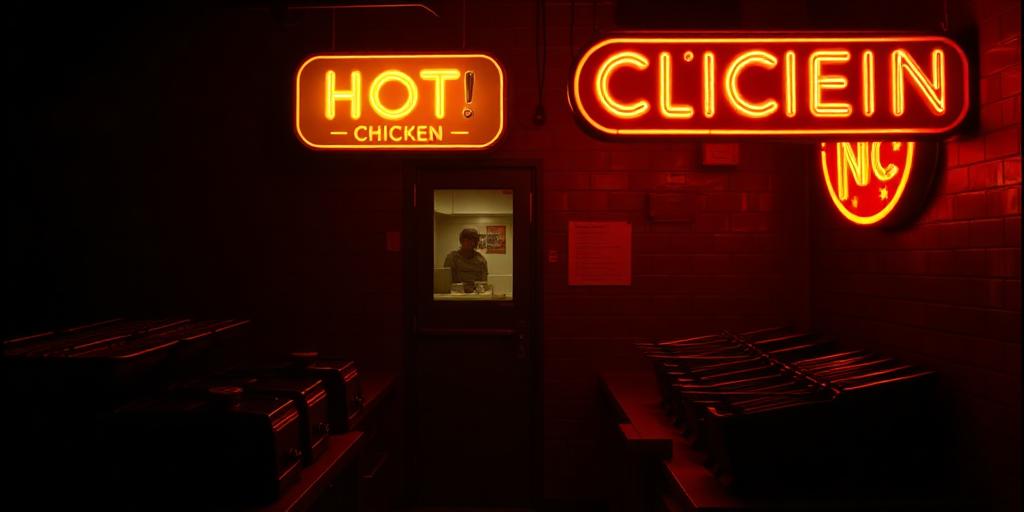
Nashville food service. Illustration generated with AI. Not a photograph of a Foody Finance client or location.
What drives financing conversations in Nashville
Bar and live music venue buildouts are a large share of requests, with equipment financing following for kitchens added to drink led concepts.
Revenue and seasonality in Nashville
Tourism and live music drive high volume bar revenue downtown, neighborhood restaurants run on locals and weekend brunch, and the peak season is spring through fall.
What this does to your numbers
Tourism runs strong most of the year with spring and fall peaks, and live music venues carry a second cost structure beyond the kitchen.
Permitting in Nashville, and what it costs to wait
Metro Public Health permitting and separate beer and liquor approvals both gate an opening, and downtown historic review adds time. Live music and bar revenue is the margin engine here, and it cannot be sold until the later approval clears.
What the wait actually costs
Downtown buildout costs have risen sharply, so every week of delay is more expensive than it was on your last project.
What raises the cost of capital here
01Tourism concentrated downtown coexists with steady neighborhood volume across East and South Nashville
02Live music venues carry sound, stage, and licensing costs on top of kitchen equipment
03Rapid rent growth shortens the payback window lenders will underwrite
Which program usually fits here
Split kitchen equipment from stage, sound, and venue infrastructure, because the 2 are secured and priced differently.
Tennessee outline. Boundary data: US Census Bureau cartographic boundary files, public domain. Simplified for display.
The lender reading your numbers to decide how much risk you are. Bank statements, time in business, and existing debt carry the most weight.
buildout capital
Money for the work that turns a space into a working kitchen: plumbing, electrical, hoods, walls, and permits. It pays for labor and materials you cannot resell, so it is priced differently than money for a fryer.
term
How long you have to repay. A longer term lowers the monthly payment and raises what the money costs in total.
draw
Taking money out of an approved line or loan. Draws tied to construction milestones mean you only start paying interest on each piece as you use it.
working capital
Cash for the everyday gaps: payroll, inventory, rent, and repairs. It is repaid out of daily or weekly sales rather than from one big event.
equipment paper
A loan or lease tied to a specific machine. The machine itself is the security, so approval leans on the value of the hardware more than on your bank statements.
hard credit pull
A formal credit check that shows on your report and can move your score a few points. It happens only after you pick a specific lender, not to get information.
covers
The number of guests served. Lenders pair it with check average to judge how reliable a month really is.
Can a Nashville bar finance stage and sound infrastructure?
Yes. Sound systems, staging, and lighting finance as equipment when they are identifiable assets, and the rest of the venue work sits inside buildout capital.
How does downtown rent growth affect a Nashville request?
It compresses the term a lender will accept. When rent is rising and the lease is short, expect a shorter amortization, which means the monthly obligation should be tested against a slow week, not an average one.
How does Nashville's live music economy affect a restaurant's cash flow beyond food sales?
Many downtown and Broadway restaurants earn a meaningful share of nightly revenue from drink minimums and cover charges tied to live music rather than food alone, so a slow touring season or a run of weeknight rain can cut receipts even when the kitchen is fully staffed and stocked. Lenders reviewing a Nashville restaurant's deposits often separate bar and entertainment revenue from food sales to understand how exposed the business is to tourism swings, since a Broadway venue built around nightly music draws a different cash pattern than a Germantown restaurant that earns steadily from weekday lunch.
How do Nashville food businesses start a financing conversation?
Start with a free review by a specialist. You share the basics of the business, the use of funds, and recent bank statements, and you see every program that fits before any credit application exists. Short term options commonly fund in 1 to 3 business days once you choose an offer.
Do you serve areas outside Nashville in Tennessee?
Yes. Every program is available statewide in Tennessee and nationwide.
What is buildout and expansion, and when does it fit a Nashville operator?
Construction money for the work that turns a space into a working kitchen, usually released in stages as the job progresses. Use it for a second location, a remodel, a patio, or a kitchen conversion, and size it to cover the permit wait, not just the build. Typical size is 50,000 to 2,000,000, funding runs 1 to 4 weeks once you choose an offer, and you repay it as fixed payment, often with a draw schedule. You will be asked for: application, contractor bids, lease, financials.
What is working capital, and when does it fit a Nashville operator?
Cash for the everyday gaps, repaid out of sales on a set schedule instead of at the end of a project. Use it for payroll, inventory, a slow stretch, or a job you have to fund before the client pays you. Typical size is 10,000 to 500,000, funding runs 1 to 3 business days once you choose an offer, and you repay it as fixed daily, weekly, or monthly payment. You will be asked for: application, 3 to 6 months of bank statements.
What is equipment financing, and when does it fit a Nashville operator?
You borrow against a specific machine, and the machine is what backs the loan. Use it when a fryer, a walk-in, an oven, or a vehicle has to be replaced and you would rather keep the cash in the account. Typical size is 5,000 to 500,000, funding runs 1 to 5 business days once you choose an offer, and you repay it as fixed monthly payment. You will be asked for: application, equipment quote, bank statements.
Why does the Nashville calendar change what I should borrow?
Tourism runs strong most of the year with spring and fall peaks, and live music venues carry a second cost structure beyond the kitchen.
What does waiting actually cost me in Nashville?
Downtown buildout costs have risen sharply, so every week of delay is more expensive than it was on your last project.
Which program do most Nashville operators end up using?
Split kitchen equipment from stage, sound, and venue infrastructure, because the 2 are secured and priced differently. That is a starting point, not a decision. The specialist review looks at your deposits, your time in business, and what the money is for before anything is recommended.
Does asking about financing in Nashville affect my credit?
No. Getting information is a conversation, not an application. There is no credit application and no hard credit pull until you have picked a specific lender and want to move forward.
Start the conversation
Talk to a specialist before you fill out an application.
Start with a free, no-obligation review. We will send the right application only after we know what you actually qualify for.