TN metro

Restaurant financing in Memphis.

Memphis barbecue and soul food operators compete in a city where reputation travels fast, but kitchen equipment built for smoke-heavy, high-volume service wears out faster than a standard setup.

How do Memphis food businesses get funded?

Memphis operators start with a free review with a specialist, share recent business bank statements, and are matched to the programs that fit the use of funds. Working capital funds in 1 to 3 business days after you choose an offer, equipment in 1 to 5, and buildout capital in 1 to 4 weeks.

Estimates, not offers: Amounts, terms, and funding times are estimates based on programs commonly available in food service. Actual terms vary by program, lender underwriting, time in business, revenue, and credit profile. Nothing here is an offer of credit or a guarantee of approval. See source and method.

How Memphis eats, and what that does to cash

01

Where Memphis eats

Downtown and South Main pull tourists off Beale Street into barbecue houses and blues clubs, where a plate runs 15 to 25 dollars and turns depend on FedExForum events and riverboat traffic. Midtown, covering Cooper-Young and Overton Square, carries the local crowd: Cooper-Young's bungalow blocks hold chef-driven bistros and wine bars at 20 to 35 dollars a head, while Overton Square's theater district anchors a later, bar-heavy scene. Broad Avenue's Binghampton stretch has rebuilt around a walkable arts corridor with breweries and a shared beer garden. East Memphis, along Poplar Avenue near Laurelwood, serves suburban families and business lunches at steakhouses and chain-adjacent concepts with steadier weekday traffic. Whitehaven, near Graceland, runs a tourist-driven soul food and fried chicken trade tied directly to visitor calendars rather than local dining habits. Frayser and Raleigh skew toward value plate lunches and drive-through traffic with thinner margins per ticket. A restaurant in Cooper-Young reads differently to a lender than one on Elvis Presley Boulevard, because Graceland traffic swings sharply with concert anniversaries and holiday visitation, producing uneven monthly revenue for any operator dependent on that single draw.
02

What Memphis serves

Barbecue defines the city, but the format matters: dry-rub ribs and chopped pork sandwiches at counter-service pits, distinct from wet-sauce styles elsewhere, running 10 to 18 dollars a plate. Fried chicken, often served with white bread and pickles, anchors both sit-down soul food rooms and takeout counters. Memphis-style barbecue nachos and barbecue spaghetti show up as local menu fixtures found rarely outside the metro. Late-night traffic on Beale Street supports counter windows selling by the slice or the skewer past midnight, while Cooper-Young's patios carry a slower brunch trade on weekends. Food trucks cluster near FedEx and AutoZone campuses for weekday lunch rather than nightlife. Breweries such as those on Broad Avenue pair kitchens with flights rather than full dinner service, keeping food costs light against beer margins. A catfish plate at a Whitehaven diner and a dry-rub rack at a Downtown pit both sell near 14 to 20 dollars, but the tourist location depends on visitor flow while the neighborhood diner depends on repeat local traffic, and that difference in customer base drives uneven weekly cash intake for the tourist-facing kitchen.

03

The Memphis calendar

FedEx, AutoZone, International Paper, and St. Jude Children's Research Hospital anchor weekday lunch demand across Downtown and East Memphis. The University of Memphis and Rhodes College add student traffic to Midtown through the academic year, dropping off each May and again in December. Memphis in May, with its World Championship Barbecue Cooking Contest and Beale Street Music Festival, concentrates a large share of annual tourist food spending into a single month and pulls staff and supply away from neighborhood restaurants during that stretch. Grizzlies games at FedExForum drive Downtown bar and restaurant traffic from October through spring, while a first-round playoff exit ends that bump abruptly. Elvis Week in August brings a second, smaller visitor surge to Whitehaven specifically. Summer heat slows patio traffic in Cooper-Young and Overton Square from July into August. A Downtown restaurant built around Memphis in May and Grizzlies season faces a long stretch from June through September with neither driver active, producing a predictable seasonal cash gap that owners must plan payroll around.

04

Growth and cost pattern

New restaurant activity concentrates in Broad Avenue's arts district, Crosstown Concourse's mixed-use redevelopment, and South Main, where older commercial buildings convert to food space at lower rent than suburban shopping centers but often require full mechanical, plumbing, and grease-trap work before a kitchen can open. East Memphis and Germantown-adjacent strip centers offer move-in-ready shells at higher square-foot rent but faster buildout timelines. Labor draws from a hospitality workforce concentrated around Beale Street and FedExForum, with wage competition tightening whenever Memphis in May staffing needs peak. Utility costs run moderate compared to coastal metros, but older Midtown and South Main buildings frequently need electrical upgrades to support commercial hood systems, adding unplanned expense. Flooding risk near the Mississippi and Wolf River corridors affects insurance and buildout decisions for ground-floor spaces close to the river. A Crosstown Concourse buildout that uncovers outdated wiring mid-renovation can add weeks to a timeline and push a planned opening past its intended lease start date, straining the deposit and first-rent-payment schedule.

Food service operation in Memphis
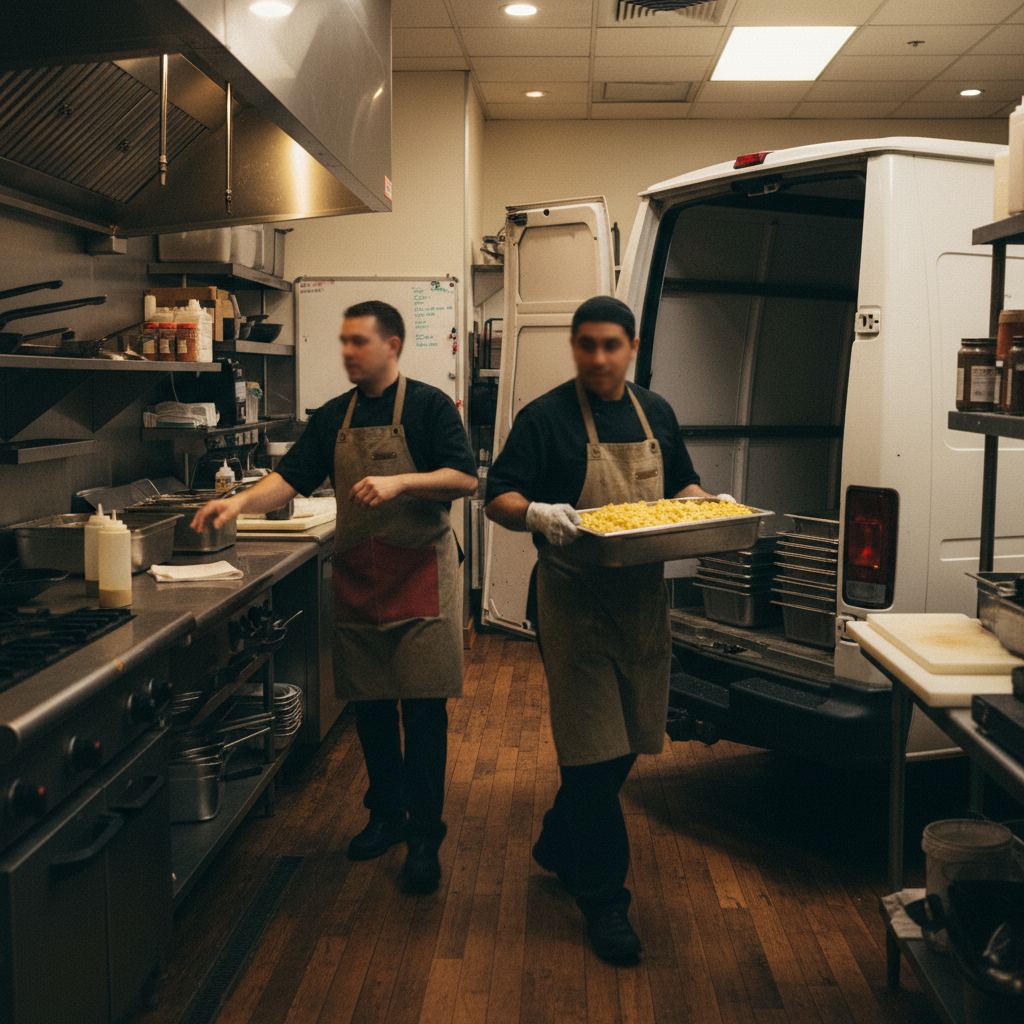
Memphis food service. Illustration generated with AI. Not a photograph of a Foody Finance client or location.

What drives financing conversations in Memphis

Capital here frequently replaces smokers, hoods, and grease management systems worn down by constant high-heat cooking, plus supports catering equipment tied to the city's convention and tourism draw around Beale Street and the National Civil Rights Museum. Downtown tourism and neighborhood soul food spots pull from different customer bases, so buildout priorities differ block by block.

Revenue and seasonality in Memphis

Beale Street and downtown draw heavy tourist traffic tied to music festivals and convention bookings, while Cooper-Young and Overton Square rely more on local weekend crowds. Summer heat and humidity affect outdoor seating for months, and tourism dips outside of peak event dates create real gaps that neighborhood spots don't face the same way.

What this does to your numbers

Big festival weekends can bring in a lot of cash fast, but the weeks between them can be much slower.

Permitting in Memphis, and what it costs to wait

The Shelby County Health Department issues food permits while the City of Memphis handles construction permitting and inspections separately, and older buildings in South Main and downtown sometimes require code upgrades tied to their historic status. Tennessee's alcohol licensing process runs through a separate state commission, which can leave a finished Beale Street storefront waiting on its own timeline before it can serve.

What the wait actually costs

A liquor license on Beale Street can take a while to clear even after the buildout is finished.

What raises the cost of capital here

  • 01Constant high-heat smoker and grease system use wears equipment down faster than standard commercial kitchen gear.
  • 02Historic building status in South Main and downtown can trigger added code upgrade requirements during renovation.
  • 03Tennessee's separate state alcohol licensing process can delay bar revenue after Beale Street buildouts finish.

Which program usually fits here

Equipment financing covers smokers and hoods that wear out fast, while a cash advance covers the gap between festival weekends.

Memphis
Tennessee outline. Boundary data: US Census Bureau cartographic boundary files, public domain. Simplified for display.

Free review, no hard credit pull

Get funds now and review your options

Step 01 of 03 · Your operation

A specialist reviews every request and reaches out the same business day

Areas we serve

  • Beale Street
  • Cooper-Young
  • Downtown Memphis
  • Overton Square
  • South Main

Financing terms on this page

Definitions for the terms used above.

draw
Taking money out of an approved line or loan. Draws tied to construction milestones mean you only start paying interest on each piece as you use it.
equipment paper
A loan or lease tied to a specific machine. The machine itself is the security, so approval leans on the value of the hardware more than on your bank statements.
covers
The number of guests served. Lenders pair it with check average to judge how reliable a month really is.
merchant cash advance
You sell a slice of future card sales for cash today. Fastest money available, and the most expensive, so it fits an emergency rather than a plan.
working capital
Cash for the everyday gaps: payroll, inventory, rent, and repairs. It is repaid out of daily or weekly sales rather than from one big event.
factor rate
A flat multiplier instead of an interest rate. Borrow 50,000 at a 1.25 factor and you repay 62,500 total, no matter how fast you pay it off.
hard credit pull
A formal credit check that shows on your report and can move your score a few points. It happens only after you pick a specific lender, not to get information.
buildout capital
Money for the work that turns a space into a working kitchen: plumbing, electrical, hoods, walls, and permits. It pays for labor and materials you cannot resell, so it is priced differently than money for a fryer.
underwriting
The lender reading your numbers to decide how much risk you are. Bank statements, time in business, and existing debt carry the most weight.
term
How long you have to repay. A longer term lowers the monthly payment and raises what the money costs in total.

Memphis financing questions

Why does barbecue equipment need to be replaced more often in Memphis?

Smokers, hoods, and grease management systems in Memphis barbecue kitchens run under continuous high-heat, high-volume conditions that wear parts down faster than a typical restaurant kitchen. Equipment financing sized for a five to seven year replacement cycle common elsewhere often doesn't match how quickly these systems actually need service or replacement here.

How seasonal is tourism revenue on Beale Street?

Beale Street businesses see concentrated revenue around major music festivals and convention bookings downtown, with quieter stretches in between those peak dates. A financing structure built around one flat monthly average misses how much of the year's revenue clusters around specific tourism events.

Why do Memphis barbecue restaurants show such uneven monthly sales on a loan application?

Memphis barbecue revenue concentrates around Memphis in May, Grizzlies season, and Elvis Week, three separate but narrow windows tied to tourism and sports rather than steady local dining habits. A lender reviewing bank statements will often see a spike in May, a moderate winter bump tied to playoff runs, and flat or declining summer months once heat cuts patio traffic. This pattern is normal for the category and not a sign of instability, but it means underwriting should weight trailing twelve-month averages over any single strong month, and owners should be ready to explain which weeks drove which deposits.

How do Memphis food businesses start a financing conversation?

Start with a free review by a specialist. You share the basics of the business, the use of funds, and recent bank statements, and you see every program that fits before any credit application exists. Short term options commonly fund in 1 to 3 business days once you choose an offer.

Do you serve areas outside Memphis in Tennessee?

Yes. Every program is available statewide in Tennessee and nationwide.

What is equipment financing, and when does it fit a Memphis operator?

You borrow against a specific machine, and the machine is what backs the loan. Use it when a fryer, a walk-in, an oven, or a vehicle has to be replaced and you would rather keep the cash in the account. Typical size is 5,000 to 500,000, funding runs 1 to 5 business days once you choose an offer, and you repay it as fixed monthly payment. You will be asked for: application, equipment quote, bank statements.

What is working capital, and when does it fit a Memphis operator?

Cash for the everyday gaps, repaid out of sales on a set schedule instead of at the end of a project. Use it for payroll, inventory, a slow stretch, or a job you have to fund before the client pays you. Typical size is 10,000 to 500,000, funding runs 1 to 3 business days once you choose an offer, and you repay it as fixed daily, weekly, or monthly payment. You will be asked for: application, 3 to 6 months of bank statements.

What is merchant cash advance, and when does it fit a Memphis operator?

You sell a slice of future card sales for money today, repaid as the card volume arrives. Use it only when speed decides the outcome. It is the fastest option here and the most expensive one. Typical size is 5,000 to 250,000, funding runs 1 to 3 business days once you choose an offer, and you repay it as factor rate, highest total cost. You will be asked for: application, bank and processing statements.

Why does the Memphis calendar change what I should borrow?

Big festival weekends can bring in a lot of cash fast, but the weeks between them can be much slower.

What does waiting actually cost me in Memphis?

A liquor license on Beale Street can take a while to clear even after the buildout is finished.

Which program do most Memphis operators end up using?

Equipment financing covers smokers and hoods that wear out fast, while a cash advance covers the gap between festival weekends. That is a starting point, not a decision. The specialist review looks at your deposits, your time in business, and what the money is for before anything is recommended.

Does asking about financing in Memphis affect my credit?

No. Getting information is a conversation, not an application. There is no credit application and no hard credit pull until you have picked a specific lender and want to move forward.

Start the conversation

Talk to a specialist before you fill out an application.

Start with a free, no-obligation review. We will send the right application only after we know what you actually qualify for.

Start a free review

Prefer to call

(833) 505-1900