Can food businesses in Rhode Island get financing?
Yes. Foody Finance works with restaurants, bars, caterers, food trucks, ghost kitchens, and distributors across Rhode Island. Equipment requests commonly fund in 1 to 5 business days, working capital in 1 to 3, and SBA financing in 3 to 12 weeks.
Estimates, not offers: Amounts, terms, and funding times are estimates based on programs commonly available in food service. Actual terms vary by program, lender underwriting, time in business, revenue, and credit profile. Nothing here is an offer of credit or a guarantee of approval. See source and method.
How Rhode Island actually makes its money in food
01
What Rhode Island actually orders
New York System wieners, small hot dogs steamed and topped with a specific celery salt-spiced meat sauce, mustard, onions, and celery salt, are ordered all the way almost universally and sold at counters that have operated since the early 20th century. Calamari, often served Rhode Island style with pickled peppers called cherry peppers, is common enough on menus statewide that the legislature named it the official state appetizer. Coffee milk, not chocolate milk, is the default flavored milk and the official state drink, built around Autocrat and Eclipse syrup brands manufactured in Lincoln. Clam cakes and chowder, in a clear broth rather than the creamy New England or tomato-based Manhattan style, define the Rhode Island shore dinner tradition at stands along Narragansett and Point Judith. Del's frozen lemonade, a slush-style drink, is a summer-only fixture at shore towns and street festivals statewide. Providence's Federal Hill neighborhood supports one of the most concentrated Italian-American restaurant districts per capita in the country. Johnnycakes, a cornmeal flatbread, persist as a breakfast item tied directly to the state's colonial-era corn milling history. Because the entire state fits within a roughly 45 minute drive end to end, a single Providence-based concept can realistically serve the whole state's population without regional menu variation, a scale advantage almost no other state offers.
02
How Rhode Island's food economy was built
Rhode Island's role as an early American port brought some of the country's first significant Portuguese immigration, particularly into Bristol and Fall River-adjacent East Bay communities, and Portuguese bakeries and linguica remain part of the state's food identity as a result. Italian immigration into Providence's Federal Hill neighborhood beginning in the late 19th century, tied to the state's textile and jewelry manufacturing employment, built what remains one of the most Italian-dense restaurant districts in the country relative to the state's small population. The New York System hot dog itself traces to Greek immigrant vendors in the early 1900s, adapting a New York-style hot dog cart format to a distinctly local topping combination. Narragansett Bay's fishing and shellfishing industry built the state's clam cake and chowder tradition, with quahogs specifically tied to the bay's shallow waters. Brown University and the Rhode Island School of Design, both in Providence, built a student and arts-driven dining economy in the city's College Hill and downtown areas distinct from the state's working-class coastal towns. Newport's Gilded Age mansion economy built an early high-end tourism dining tradition that persists in the city's harborfront restaurants today. The state's decline in textile and jewelry manufacturing through the mid to late 20th century left many mill towns with a smaller population than their restaurant infrastructure was originally built to serve, a mismatch some towns have not fully absorbed.
03
The calendar that carries the year
Newport's summer season, anchored by the Newport Folk Festival and Newport Jazz Festival in late July and early August, drives the single heaviest concentrated tourist revenue period for the entire state's coastal restaurant sector. Narragansett and other shore towns generate the bulk of their annual clam shack and seafood revenue between Memorial Day and Labor Day, then cut hours sharply or close entirely through the winter. WaterFire in Providence, an art installation lighting the river downtown on select evenings from spring through fall, draws crowds that fill nearby restaurants on those specific nights. Federal Hill's Columbus Day weekend and ongoing Italian feast calendar, including saints' day festivals through summer, draws neighborhood-specific crowds tied to the Catholic liturgical calendar. Brown University and RISD's academic calendar creates a predictable population swing in Providence, with the city's downtown and College Hill restaurant traffic dropping noticeably each May and returning each September. The Blessing of the Fleet in Galilee each summer marks the ceremonial opening of the state's commercial fishing season and draws visitors to the Point Judith area. Winter along the coast is markedly quieter than summer, with many seasonal shore restaurants closing outright from roughly November through March. Because the state's economy leans so heavily on a compressed May-through-September coastal tourist season, operators there plan an entire year's cash flow around five months of activity.
04
Who runs Rhode Island's restaurants
Federal Hill's Italian restaurants remain heavily family owned, with several of the neighborhood's most established restaurants operated by the same family for multiple generations since the early to mid 20th century. New York System hot dog counters, though a small category, are similarly multi-generational and tightly held. Newport's harborfront and mansion-district restaurants attract more outside investment and seasonal-focused ownership groups given the tourism-driven revenue model. Providence's growing downtown and Fox Point restaurant scene includes a mix of Johnson and Wales University-trained chef-owners, reflecting the culinary school's presence in the city. Franchise density statewide is comparatively low given the state's small geographic footprint and dense independent restaurant tradition, though it rises along suburban corridors in Warwick and Cranston. Rhode Island's minimum wage sits above the federal floor and has risen steadily in recent years, putting real upward pressure on quick service labor costs in a small state where operators cannot easily relocate to a cheaper adjacent county the way they might in a larger state. Seasonal shore town restaurants face acute staffing shortages every summer as the working-age population that could staff them competes for the same limited housing stock as summer renters. Johnson and Wales' culinary program feeds a steady stream of trained kitchen staff into Providence specifically, a supply advantage smaller states without a major culinary school do not have.
05
What it costs to operate here
Providence's Federal Hill and downtown commercial rents run moderate compared to nearby Boston, giving operators priced out of that larger market a comparatively affordable alternative just an hour away. Newport's harborfront and Bellevue Avenue-adjacent commercial space commands a steep premium tied directly to tourist season revenue potential. National Grid, the state's dominant utility, charges electricity rates among the higher end in New England, adding a real cost pressure smaller operators feel more acutely given the state's already-elevated minimum wage. Quahog and other shellfish costs track directly with Narragansett Bay water quality and harvest closures, and a pollution-related closure can remove a signature ingredient from menus with no substitute at the same price point. Rhode Island's small size means most non-seafood ingredient supply chains run through the same regional distributors serving greater Boston, so produce and protein costs track that larger market closely rather than offering any standalone discount. Insurance costs along the immediate coast carry hurricane and flood exposure premiums that have risen with recent storm activity, particularly in low-lying shore communities. Property tax rates vary significantly by municipality within a very small area, meaning a restaurant in Providence and one in neighboring Cranston can face notably different tax burdens despite being minutes apart.
06
Where Rhode Island is expanding
Providence's growth concentrates in the Fox Point, West Side, and Olneyville neighborhoods, areas that have absorbed new independent restaurant openings as Federal Hill's core has become fully built out. Warwick and Cranston, the state's larger suburban communities, continue to add franchise and fast casual development along their major retail corridors near T.F. Green Airport. East Bay towns including Bristol and Warren have seen renewed restaurant investment tied to waterfront redevelopment and proximity to both Providence and Fall River, Massachusetts, just over the state line. Newport's growth remains constrained by limited commercial space within its historic district, pushing new investment toward renovation of existing buildings rather than new construction. South County towns like Narragansett and Westerly continue to add seasonal shore dining concepts tied to summer rental population growth. Because the entire state covers roughly 1,200 square miles, a single expanding operator can reach nearly the whole market from one central commissary, a logistical advantage that offsets the state's high labor and utility costs somewhat. Historic district review in Newport and parts of Providence slows permitting timelines for any buildout involving an older building's facade, and that review process alone can add months to a project timeline before construction even begins.
Licensing and permitting in Rhode Island, and what it costs to wait
The Department of Health licenses food businesses statewide.
Municipal license caps in a small market push acquisition prices above the value of the equipment inside the building, which shifts these transactions onto SBA terms.
What Rhode Island operators finance
Seasonal working capital and equipment financing lead.
The Rhode Island revenue calendar
Newport concentrates revenue from May through October, while Providence holds steadier on university and downtown volume.
Revenue mix and seasonality in Rhode Island
Newport and the coast earn a disproportionate share of the year in one summer, Providence check averages hold steady on a dense dining scene, and academic calendars visibly move neighborhood volume.
What this does to your numbers
Newport concentrates revenue between May and October, while Providence holds steadier on university and downtown volume.
What a delay costs in Rhode Island
Newport seasonal rent is due before the season starts, and historic building limits complicate any kitchen expansion in both cities.
What underwriting looks at in Rhode Island
01Small state geography means a single kitchen can serve most of the market
02Newport seasonal rents require capital in place before the season opens
03Historic building constraints complicate kitchen expansion in both cities
Which program usually fits here
Preseason working capitalcovers rent and hiring before revenue exists, which is the gap that catches new operators here every year.
Markets we serve in Rhode Island
We work with operators across Rhode Island, including Providence, Newport, Warwick, Pawtucket, Cranston, and Narragansett. Rural and small market operators qualify for the same programs.
Newport concentrates revenue from May through October, while Providence holds steadier on university and downtown volume
Small state geography means a single kitchen can serve most of the market
Acquisition, refinance, or a longer buildout
Estimates, not offers: Amounts, terms, and funding times are estimates based on programs commonly available in food service. Actual terms vary by program, lender underwriting, time in business, revenue, and credit profile. Nothing here is an offer of credit or a guarantee of approval. See source and method.
Educational only. Not an offer to lend, a commitment to fund, or a rate quote. Figures are illustrative and actual terms are set by the funding partner after underwriting. Downloading this does not create a brokerage, advisory, or fiduciary relationship with Foody Finance.
One page PDF with the Rhode Island timelines table and the state plate photo
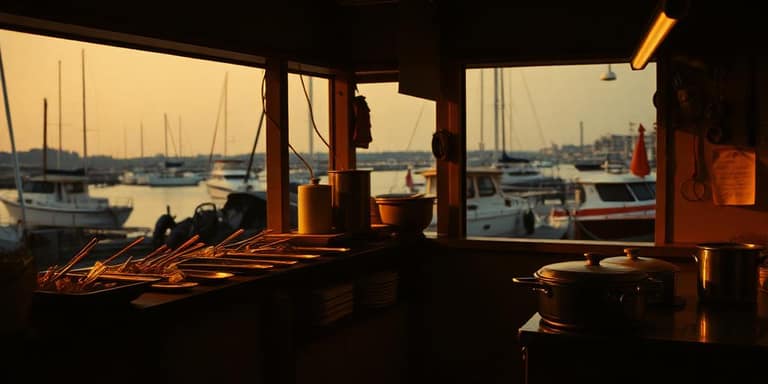
Rhode Island plateClam cakes and chowderA short coastal season concentrates revenue, so the fall capital plan matters more than the spring one
Financing terms on this page
Definitions for the terms used above. Every term links to its entry in the full glossary.
A loan or lease tied to a specific machine. The machine itself is the security, so approval leans on the value of the hardware more than on your bank statements.
Money for the work that turns a space into a working kitchen: plumbing, electrical, hoods, walls, and permits. It pays for labor and materials you cannot resell, so it is priced differently than money for a fryer.
A formal credit check that shows on your report and can move your score a few points. It happens only after you pick a specific lender, not to get information.
A preapproved pool of money you pull from only when you need it, then pay back and reuse. You pay for what you draw, not for the full amount sitting there.
Yes. Food service operators in Rhode Island are referred for equipment financing, working capital, lines of credit, SBA loans, and buildout capital. Program availability varies by state. Merchant cash advance and other revenue-based financing structures are not offered to businesses in Texas, Virginia, or Connecticut.
How fast can a Rhode Island restaurant get funded?
Short term programs commonly fund in 1 to 3 business days and equipment requests in 1 to 5. SBA financing in Rhode Island runs 3 to 12 weeks.
How do Newport operators finance a 6 month season?
The draw happens in early spring for staffing, inventory, and repairs, and repayment concentrates in the summer. Equipment work gets scheduled for the winter, when the kitchen can actually be closed.
Which Rhode Island cities do you serve?
All of them. Operators we work with in Rhode Island run in Providence, Newport, Warwick, Pawtucket, Cranston, and Narragansett, along with smaller markets across the state. Underwriting reviews deposits and the use of funds, not the population of the market.
What documents do Rhode Island operators need?
For the first review, just the form. If you choose a short term program, the lender usually asks for 3 to 6 months of business bank statements. SBA adds tax returns, interim financials, and a debt schedule.
Does Rhode Island licensing affect financing?
Licensing affects buildout timelines and, in some transactions, collateral value. Include local permitting details in the request so a funding partner can account for them when structuring financing.
Do I need a hard credit pull to start in Rhode Island?
No. Our team reviews your request and looks for a funding partner that fits without a hard credit pull. A funding partner discusses programs with you and obtains your authorization before any hard credit pull.
What is working capital, and when does it fit a Rhode Island operator?
Cash for the everyday gaps, repaid out of sales on a set schedule instead of at the end of a project. Use it for payroll, inventory, a slow stretch, or a job you have to fund before the client pays you. Typical size is 10,000 to 500,000, funding runs 1 to 3 business days once you choose an offer, and you repay it as fixed daily, weekly, or monthly payment. You will be asked for: application, 3 to 6 months of bank statements.
What is equipment financing, and when does it fit a Rhode Island operator?
You borrow against a specific machine, and the machine is what backs the loan. Use it when a fryer, a walk-in, an oven, or a vehicle has to be replaced and you would rather keep the cash in the account. Typical size is 5,000 to 500,000, funding runs 1 to 5 business days once you choose an offer, and you repay it as fixed monthly payment. You will be asked for: application, equipment quote, bank statements.
What is buildout and expansion, and when does it fit a Rhode Island operator?
Construction money for the work that turns a space into a working kitchen, usually released in stages as the job progresses. Use it for a second location, a remodel, a patio, or a kitchen conversion, and size it to cover the permit wait, not just the build. Typical size is 50,000 to 2,000,000, funding runs 1 to 4 weeks once you choose an offer, and you repay it as fixed payment, often with a draw schedule. You will be asked for: application, contractor bids, lease, financials.
Why does the Rhode Island calendar change what I should borrow?
Newport concentrates revenue between May and October, while Providence holds steadier on university and downtown volume.
What does waiting actually cost me in Rhode Island?
Newport seasonal rent is due before the season starts, and historic building limits complicate any kitchen expansion in both cities.
Which program do most Rhode Island operators end up using?
Preseason working capital covers rent and hiring before revenue exists, which is the gap that catches new operators here every year. That is a starting point, not a decision. Our team reviews your deposits, time in business, and use of funds before looking for a funding partner that fits.
Does asking about financing in Rhode Island affect my credit?
No. Getting information is a conversation, not an application. There is no credit application and no hard credit pull until you have picked a specific lender and want to move forward.
A location page indicates that Foody Finance is taking clients in that market. It does not represent a physical office, storefront, or licensed presence in that city or state. All services are delivered remotely by our US-based team.
Start the conversation
Send a request before you fill out an application
Start with a free, no-obligation request. Our team reviews it and looks for a funding partner that fits.